
How to Set Music Production Goals in 2026 (That You’ll Actually Finish) | Buy Beats Now
Buy Beats Now Team / Updated Dec 30, 2025

If you’re like me, every year around December you sit down and write out your goals for the year ahead and what you’re going to do differently. I can confidently say that most of those goals end up being too far-fetched and unrealistic to actually accomplish.
People love to say, “If you shoot for the moon, you’ll land among the stars,” but when it comes to setting goals, they need to be obtainable. Goals that are too big, too vague, or poorly structured usually lead to burnout instead of progress.
In this post, we break down a simple, step-by-step formula for setting music production goals that are realistic, actionable, and designed to help you finish what you start.
- Set One Clear Yearly Music Production Goal
- Break Your Yearly Music Goal Into Quarterly & Monthly Wins
- Set Skill-Based Goals That Actually Improve Your Music
- Build Music Production Goals Around Your Actual Lifestyle
- Track Progress Like a Producer, Not a Perfectionist
- BONUS: Set Financial Goals If You Want to Make Money with Music
Set One Clear Yearly Music Production Goal
Before you start breaking things down into months or weeks, you need to ask yourself: what do I want to accomplish this year? One of the best ways to figure this out is to grab a piece of paper and write down everything you want to achieve in terms of music. This will help you identify one clear, primary goal to focus on for the year.
The idea is that next December, you’ll look back and be able to say, “I actually did that.” Too often, not just music producers but most people set too many goals at once and end up losing sight of what their main goal was supposed to be. Focusing on one primary music production goal is optimal, with every other small win supporting it.

That Goal Might Be:
- Releasing an EP or album
- Finishing 24–36 full tracks
- Building a solid portfolio for placements or clients
- Improving your production quality enough to release music confidently
Pick one goal and attack it. Everything else you do this year should feed into it. By next December, you won’t just have a list of things done—you’ll have achieved something that matters.
Break Your Yearly Music Goal Into Quarterly & Monthly Wins
Yearly goals give you direction, while quarterly and monthly goals are what actually create the momentum. Without those smaller wins and milestones, it’s harder to track how close or far you are from your big goal. If your goal is too big and too far away, it’s easy to lose focus and fall out of consistency.
This is where quarterly and monthly goals come into play. They break a big music goal into bite-sized pieces you can actually act on. For example, if your goal is to grow your Instagram by 1,200 followers in a year, you’d break that down quarterly into 300 followers, and then monthly into 100 followers per month.
Instead of chasing one massive number, you’re focused on hitting smaller, realistic targets that stack over time and keep you moving forward.
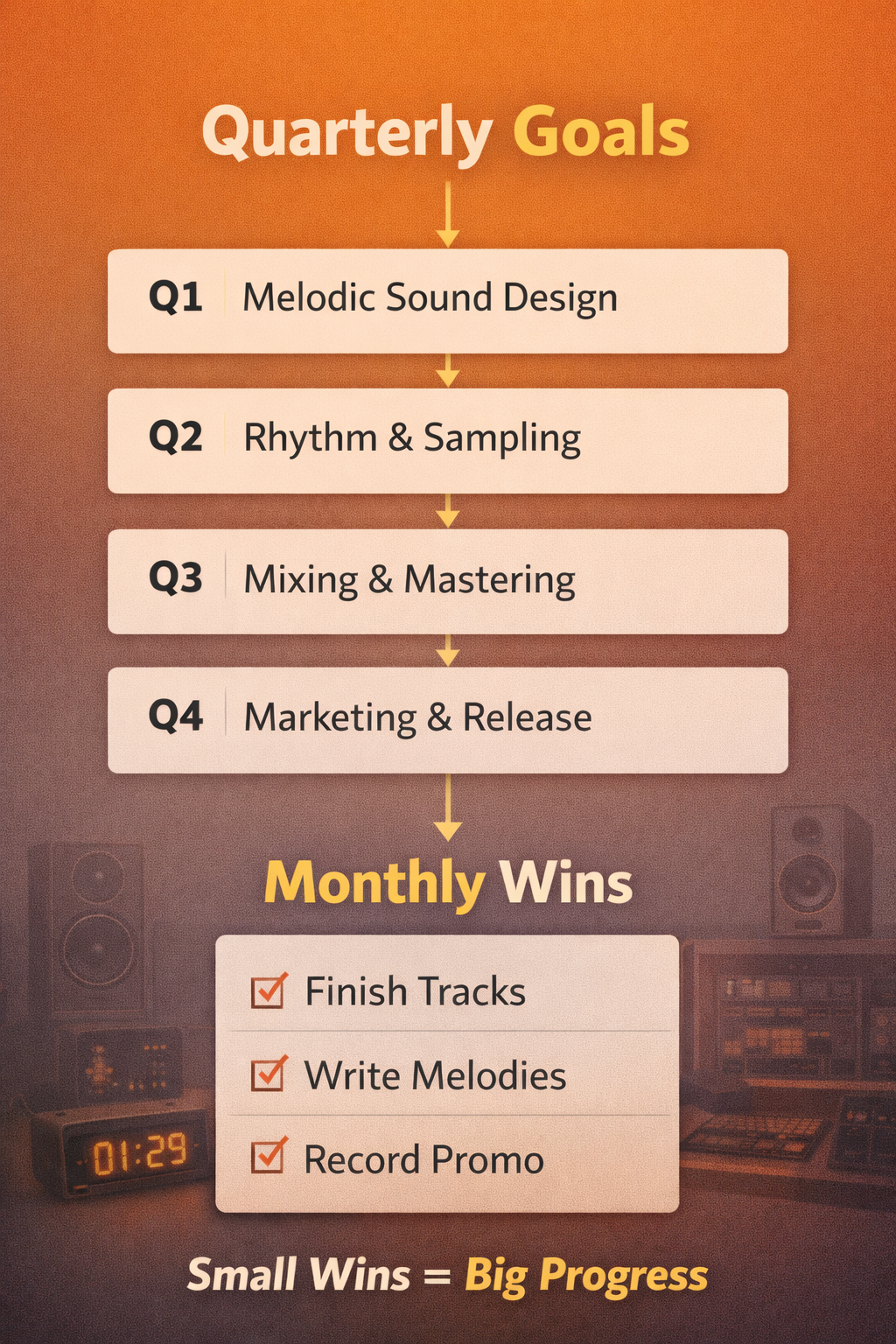
Quarterly Goals Give You Direction
Think of each quarter as a chapter of your year. Each one has a specific focus that moves you closer to finishing music instead of just starting it.
Your year could look like this:
-
Q1: Melodic Foundation & Sound Design
-
Q2: Rhythm, Groove & The Art of the Sample
-
Q3: The Engineering Phase (Mixing & Mastering)
-
Q4: Distribution, Marketing & Future Planning
Quarterly goals help you zoom out and take a look at the bigger picture. They keep your producer workflow intentional instead of unpredictable and inconsistent. It helps make your time in the studio actually worth your while.
Monthly Goals Turn Direction into Execution
If quarterly goals direct you to where you’re going, monthly goals are what actually get you there. Every month should answer the same question: am I doing what I need to do to stay on pace?
This might look like finishing 15 full beats, writing 20 new melodies, or recording content for marketing and promotion. The exact numbers don’t matter as much as the intention behind them—each monthly goal should clearly move you closer to your main objective.
Monthly goals keep you moving forward even when inspiration dips (and honestly, that’s often when the best ideas are made). Instead of feeling overwhelmed by one massive year-end goal, you’re focused on what’s right in front of you.
When you break big goals into smaller wins, you’re far more likely to see real results. Progress becomes part of your routine, not something you’re always putting off for later.
Set Skill-Based Goals That Actually Improve Your Music
Output goals matter, but it’s skill-based goals that consistently raise the bar and push your sound to the next level. If you want real growth, you have to be willing to try new things and be intentional about what you’re improving.

Instead of going through the motions and trying to “get better,” schedule focused learning blocks. This could mean spending every day for a week on drum programming, then the next week exploring a new genre. You’d be surprised how much you will grow as an artist by doing this. It keeps your brain actively working, thinking of new ideas, and constantly on its toes.
You might also commit to learning one plugin in full depth—compression, saturation, or sound design. When skill-based goals are aligned with monthly output goals, improvement becomes measurable and unstoppable.
Build Music Production Goals Around Your Actual Lifestyle
Unrealistic goals are the fastest way to quit. If your goals don’t align with your real-life schedule, consistency will always feel like a struggle. Strong music production habits are built by working with your schedule, not against it.
Ask yourself a few honest questions: how many hours per week can I realistically work on music? What environment do I work best in? How long can I stay consistent before burnout sets in?
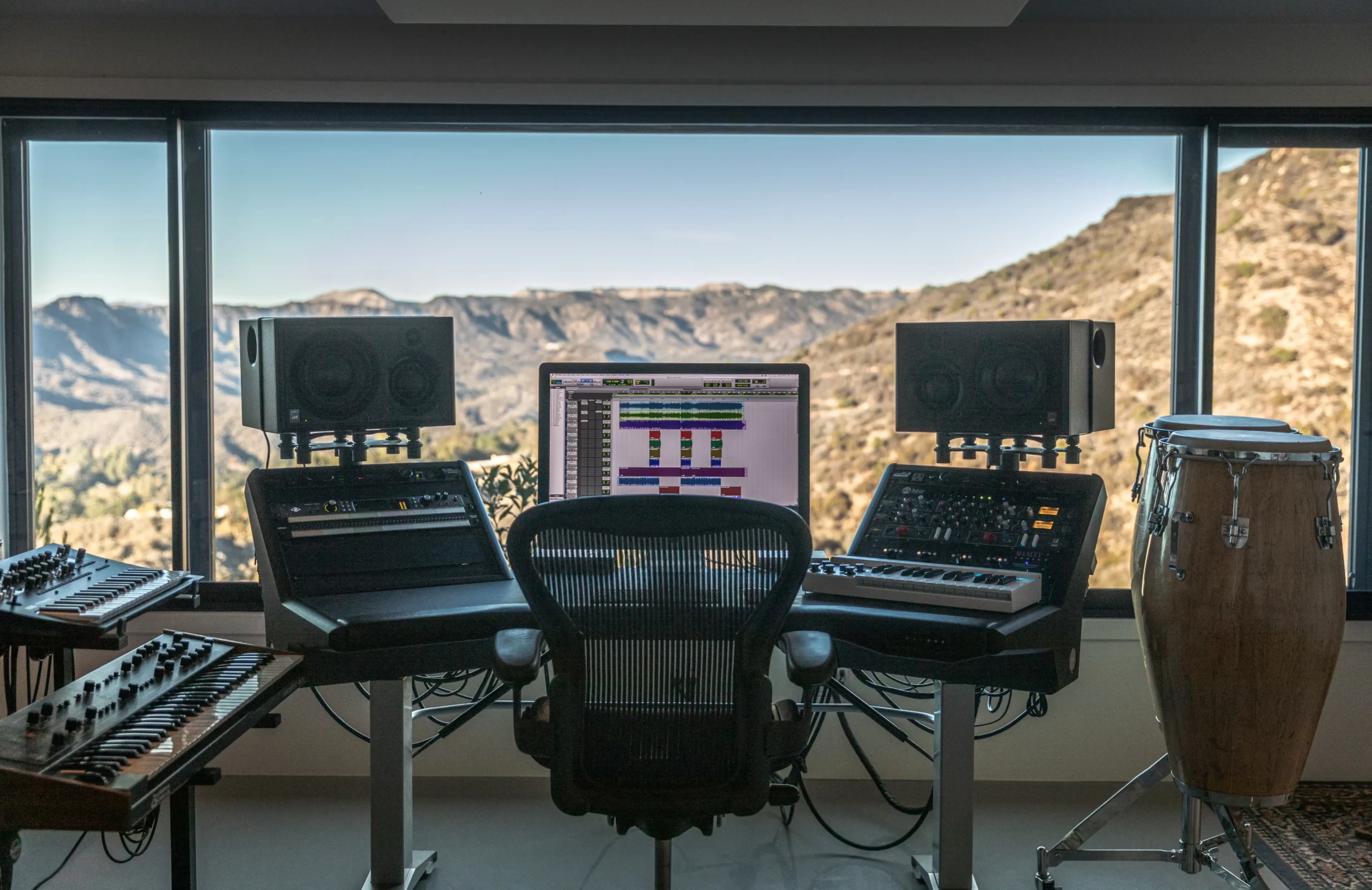
Many producers successfully balance their music goals with a full-time job by aiming for three to five highly focused sessions per week. If your schedule is tight but you want it badly enough, you’ll find a way to make time—even if that means one high-impact session per week. One focused session beats showing up every day and giving half effort.
Prioritize finishing music instead of chasing perfection. Great producers have great time management. Your goals should fit your life, not fight it.
Track Progress Like a Producer, Not a Perfectionist
BONUS: Set Financial Goals If You Want to Make Money with Music
If you’re serious about building a brand with your music and making money from it, creativity alone isn’t enough—you need a plan of action. Realistic financial targets give your efforts direction and turn music production into something sustainable. The goal isn’t to get rich overnight, because that rarely happens, but to create forward momentum that can eventually snowball.

Building a simple income plan for where your money will come from can be extremely effective for the long-term success of your music business. That income might come from beat sales through online stores, streaming, client work, or even content creation.
Once you know your income streams, attack them. Use the actions outlined above to set clear goals—upload a certain number of beats, commit to consistent releases, or reach out to a specific number of clients each month. Even small financial goals and progress create focus and accountability.
Once you start making money from music, you’ll have the motivation to grow it into something truly meaningful.